Skip to content
Skip to main navigation
Skip to first column
Skip to second column
Home
Succulents
Succulents common
The cactus family
Cactaceous genera
A - C
D - H
I - N
O - R
S - Z
Subfamilies
Epiphytic cacti
Flower forms
Accepted genera
Succulent families
Flower forms
Cultivation guide
Cultural practices
Sowing
The propagator
Cultivation notes
Wintertime
The diseases
Pesticides
Phytoparasitosis
The greenhouse
The life of plants
How to grow them
The habitats
Succulents map
Genera-families map
Vegetation-soil map
Climate map
Rain-heat map
The flora of Tenerife
Photo galleries
Cactus e Dintorni
Home
Search
Search Keyword:
Search
All words
Any words
Exact Phrase
Ordering:
Newest First
Oldest First
Most Popular
Alphabetical
Section/Category
Search Only:
Categories
Pictures
Articles (Keyword Density)
Sections
Web Links
Search Keyword
vegetazione
Total: 43 results found.
Display #
5
10
15
20
25
30
50
100
All
Page 2 of 3
21.
gymnocalycium
(Phocagallery / gymnocalycium)
Habitat: South America: Argentina, Uruguay, Paraguay, southern Brazil, Bolivia, found from sea level to 1000 m (3300 ft) of altitude. Description: a genus of small, globular or short cylindrical cacti ...
22.
hatiora
(Phocagallery / hatiora)
Habitat: Central and South America, with a higher concentration in the rainforests of Brazil. Description: the genus comprises some epiphytic species with drooping habit that flower in late winter. It ...
23.
melocactus
(Phocagallery / melocactus)
Habitat: West Indies, Brazil, Cuba, Peru, Mexico. In their native countries they can be also found growing on the seashore. Description: globular cacti with straight ribs and very variable in spination. ...
24.
oroya
(Phocagallery / oroya)
Habitat: foggy deserts on Peruvian Andes. Description: a group of small, globular, slightly squashed cacti with variable spination, often pectinate that flower in the summer after five years or so from ...
25.
passifloraceae
(Phocagallery / passifloraceae)
Habitat: Kenia, Namibia, Asia. Description: a group of woody, evergreen, floriferous vines. The leaves are alternate, sometimes lobed. The fruit is a berry. They may have a spiny caudex. Soil: basic ...
26.
pelecyphora
(Phocagallery / pelecyphora)
Habitat: Mexico. Description: a globular genus, growing in deserts, which has woolly areoles on the tubercles, pectinate spines that do not harm if touched and a large, fleshy root. In the spring, pink ...
27.
rhipsalis
(Phocagallery / rhipsalis)
Habitat: Central and South America, Asia, eastern and western Africa, Madagascar, Ceylon. Description: a wide genus of highly decorative plants comprising many different epiphytic, forest species. They ...
28.
schlumbergera
(Phocagallery / schlumbergera)
Habitat: rainforests of Brazil. Description: epiphytic, non-parasitic, short day plants having flattened, jointed stems that tend to bifurcate. The commercially available plants are, for the most part, ...
29.
selenicereus
(Phocagallery / selenicereus)
Habitat: tropical forests of Mexico, Central and South America. Description: a group of epiphytic plants having thin, flexuos runners with a cylindrical or angular section, developing ribs and aerial ...
30.
x-epicactus
(Phocagallery / x-epicactus)
Habitat: Cultivar. Description: a group of hybrids obtained by crossing Epiphyllum, Echinopsis, Nopalxochia, Hylocereus, Heliocereus, all having flat, leaf-like stems. During the spring, sometimes in ...
31.
Fitofarmaci
(Coltivazione/Le malattie)
... di contatto, combattono la penetrazione, ma in determinate condizioni possono interrompere la
vegetazione
. I composti del rame vanno usati mediante irrorazione. Lo zolfo agisce bloccando la membrana cellulare ...
Saturday, 04 April 2009
32.
F.A.Q.
('Uncategorised Content')
QUESTIONS AND ANSWERS Here beginners can find answers to their most frequently asked questions: 1 – Some of my succulents never set seed. Why is that so? 2 – How can I get my cacti to ...
Monday, 12 January 2009
33.
Planisferi della vegetazione e dei suoli
(Vita delle piante/Gli ambienti)
VEGETAZIONE
SPONTANEA PRINCIPALI TIPI DI SUOLI ...
Sunday, 11 January 2009
34.
Our publications
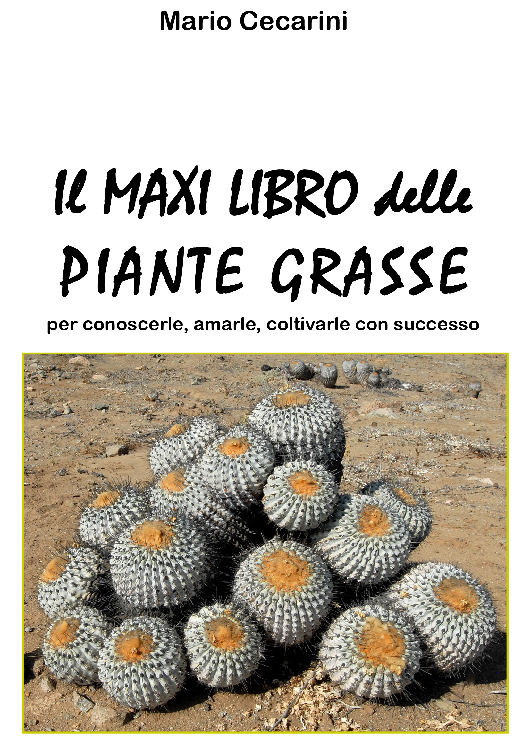
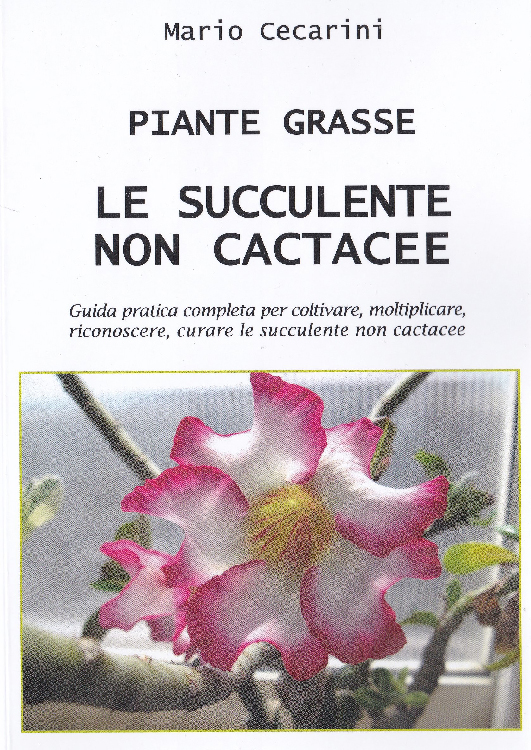
('Uncategorised Content')
... luminosa. Fornire molta aria fresca in
vegetazione
. Le seguenti specie tropicali preferiscono una posizione meno luminosa: alfredii, ambovombensis, aureoviridiflora, bongolavensis, brunellii, capmanambatoensis, ...
Wednesday, 07 January 2009
35.
Planisfero dei climi
(Vita delle piante/Gli ambienti)
... le correnti marine, siano esse calde o fredde; la presenza di
vegetazione
, in grado di provocare un aumento dell'umidità dell'aria e di rendere il clima più fresco. Distribuzione ...
Sunday, 11 January 2009
36.
What is Cites?
('Uncategorised Content')
CITES (the Convention on International Trade in Endangered Species of Wild Fauna and Flora) is an international agreement between governments. Its aim is to ensure that international trade in specimens ...
Wednesday, 07 January 2009
37.
Phytosanitary products
(Cultivation guide/The diseases - French (Fr))
They have been classified by the European Community into seven toxicity categories: T+ = very toxic; T = toxic; Xn = harmful; Xi = irritant; F = highly flammable; O = oxidizing; N/C = not classified. ...
Saturday, 04 April 2009
38.
Planisphere of climate
(The life of plants/The habitats - Español(Spanish Formal International))
Climatic zones distribution across the globe according to the Wladimir Köppen
Sunday, 11 January 2009
39.
F.A.Q.
('Uncategorised Content')
QUESTIONS AND ANSWERS Here beginners can find answers to their most frequently asked questions: 1 – Some of my succulents never set seed. Why is that so? 2 – How can I get my cacti to ...
Monday, 12 January 2009
40.
Our publications
('Uncategorised Content')
... luminosa. Fornire molta aria fresca in
vegetazione
. Le seguenti specie tropicali preferiscono una posizione meno luminosa: alfredii, ambovombensis, aureoviridiflora, bongolavensis, brunellii, capmanambatoensis, ...
Wednesday, 07 January 2009
«
Start
Prev
1
2
3
Next
End
»
Home
× Chiudi
CD-DVD-eBook
Glossary
Web links
Events
F.A.Q.
In-depth articles
Reviewed books
How to photograph them
C.i.t.e.s.
Servizi
Our publications
Sorry, but Javascript is not enabled in your browser!
Add Site to Favorites
Add Page to Favorites
Press (Ctrl+D) to add the page!
You have to do this manually!
donate one coffee
Support Cactus & Dintorni!
Donation amount
Popular Tags
piante grasse
serra
succulente
mammillaria
piante
specie
echinocereus
euphorbia
coltivazione
cactacee
generi
immagini
cactus
echinopsis
gymnocalycium
escobaria
aloe
coryphantha
ferocactus
turbinicarpus
lobivia
rebutia
grasse
distribuzione
agave
opuntia
pianta
temperatura
thelocactus
canariensis
eriosyce
genere
By
Zaragoza Clouds